Language: English











Strengthening Bridge Pier and Girder
Unidirectional Carbon Fiber
Bridge strengthening Philippines, CFRP pier confinement, CFRP girder flexural retrofit, carbon fiber wrap cylindrical piers, T-girder strengthening, seismic retrofit bridge, Horse Construction

Project Overview
| Item | Detail |
|---|---|
| Structure | Silaga Bridge, multi-span reinforced concrete T-girder bridge on cylindrical piers |
| Location | Mindanao, Philippines |
| Issue Identified | Aged reinforced concrete bridge with progressive concrete deterioration, corroding reinforcement, and insufficient shear/confinement capacity in piers and inadequate flexural capacity in T-girder soffits due to years of service deterioration |
| Strengthening Solution | External CFRP wrapping of cylindrical piers for confinement and shear enhancement; CFRP bonding to girder soffits for flexural capacity increase |
| Materials Supplied by Horse Construction | Unidirectional carbon fiber fabric (wet lay-up) + structural epoxy saturant |
| Applicable Standards | NSCP 2015 (National Structural Code of the Philippines), ACI 318-14, ACI 440.2R-17 |
Silaga Bridge is a multi-span reinforced concrete highway bridge supported on cylindrical concrete piers founded in a riverbed. The superstructure consists of cast-in-place concrete T-girders supporting a composite deck slab. The bridge crosses a river in a tropical environment with seasonal high-flow conditions and is located in a seismically active region of the Philippines.

Problem
After years of service, the bridge exhibited progressive structural deterioration under continuous traffic loading and the harsh tropical humid river environment. The structural evaluation identified two primary deficiency areas:
Pier Deficiencies:
Long-term exposure to the humid tropical river environment has caused concrete deterioration and corrosion of the internal reinforcement within the pier columns
Corrosion-induced section loss of transverse reinforcement (ties/hoops) has compromised the confinement capacity of the pier columns, reducing their ability to resist shear forces
Concrete surface degradation and loss of cover in multiple pier columns indicated advanced deterioration beyond routine repair
Original reinforcement detailing, adequate at the time of construction, no longer provides sufficient structural capacity after years of material degradation

Girder Deficiencies:
Years of sustained traffic loading have resulted in progressive flexural deterioration of the T-girder soffits
Long-term environmental exposure has contributed to concrete cover deterioration and accelerated reinforcement corrosion
Existing longitudinal reinforcement has effectively lost a portion of its original cross-sectional area due to corrosion, reducing the flexural capacity of the girders below their original design capacity
Progressive crack development at mid-span regions indicated that the degraded girders can no longer reliably carry their intended service loads
Solution
For Piers (CFRP Confinement Wrapping):
Restore lateral confinement capacity lost due to reinforcement corrosion and concrete deterioration
Enhance shear capacity of degraded pier columns to compensate for the loss of corroded transverse reinforcement
Improve ductility and energy dissipation capacity under seismic loading, which has been compromised by years of material degradation
Provide a corrosion-immune protective layer around the pier to prevent further environmental deterioration
Comply with NSCP 2015 seismic zone requirements for bridge structures

For T-Girders (CFRP Flexural Strengthening):
Restore flexural capacity of degraded T-girder soffits to meet the bridge's original design requirements
Compensate for the loss of effective reinforcement area due to years of corrosion-induced section loss
Limit further crack propagation and control service-level deflections
Ensure composite action between CFRP and existing concrete through adequate bond design per ACI 440.2R-17
The CFRP solution was selected over conventional strengthening methods (such as concrete jacketing of piers or steel plate bonding to girders) because:
Minimal dead load addition — CFRP adds negligible weight to the existing structure, critical for bridge foundations in river environments
Rapid installation — wet lay-up CFRP can be applied with basic scaffolding access, minimizing traffic closure duration
Corrosion immunity — carbon fiber does not corrode in the humid tropical river environment, unlike steel jacketing solutions
Confinement efficiency — full-wrap CFRP provides superior confinement-to-weight ratio compared to concrete or steel jacketing for cylindrical piers
Seismic performance — the increased ductility from CFRP confinement directly addresses the seismic deficiency identified in the assessment

Materials Supplied by Horse Construction
For this project, Horse Construction supplied:
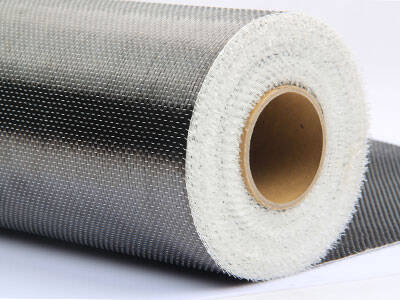
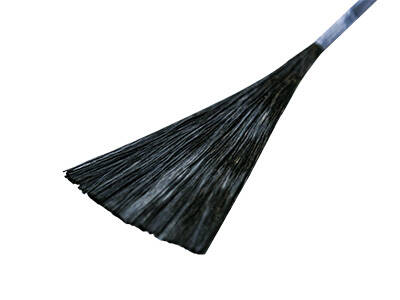
Unidirectional Carbon Fiber Fabric — for both pier confinement wrapping and girder soffit flexural strengthening
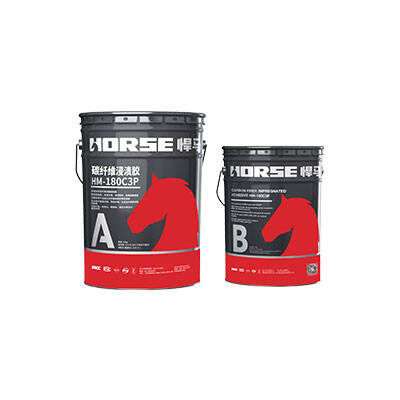
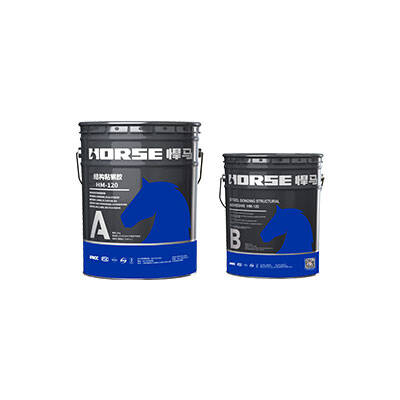
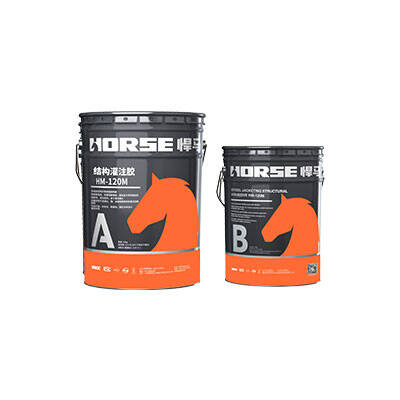
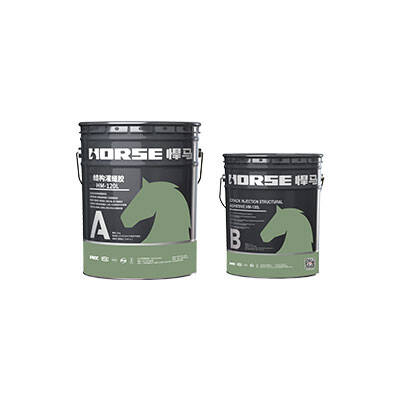
Structural Epoxy Saturant — two-part epoxy resin system for wet lay-up application and concrete bonding